Finding the Best Scope For Prs Rimfire Matches doesn’t have to mean spending thousands of dollars on high-end optics. In fact, I’ve spent years testing budget-friendly scopes on my .22LR trainers and competition rigs, and I can confidently say that you can achieve excellent precision without breaking the bank. PRS rimfire matches demand repeatable tracking, clear glass, and reliable turrets—features that are increasingly available in affordable scopes.
In this guide, I’ll walk you through six of the best value scopes I’ve personally tested or extensively evaluated. These are not just “cheap” options—they’re capable performers designed for real-world target shooting.
Top Product List: Best Scope For Prs Rimfire Matches
- Arken Optics SH4 GEN2 4-16X50 Rifle Scope FFP – Best budget PRS starter scope
- Arken Optics EP5 5-25X56 Rifle Scope FFP – Best value for long-range rimfire
- Athlon Optics Argos BTR GEN2 6-24X50 First Focal Plane Riflescope – Best tracking consistency under $400
- Athlon Optics Talos 6-24x50 Second Focal Plane Riflescopes – Best ultra-budget option
- UTG 3-9x32 BugBuster AO – Best compact rimfire scope
- Vortex Optics Diamondback Tactical First Focal Plane Riflescopes – Best mid-range upgrade option
Arken Optics SH4 GEN2 4-16X50 Rifle Scope FFP
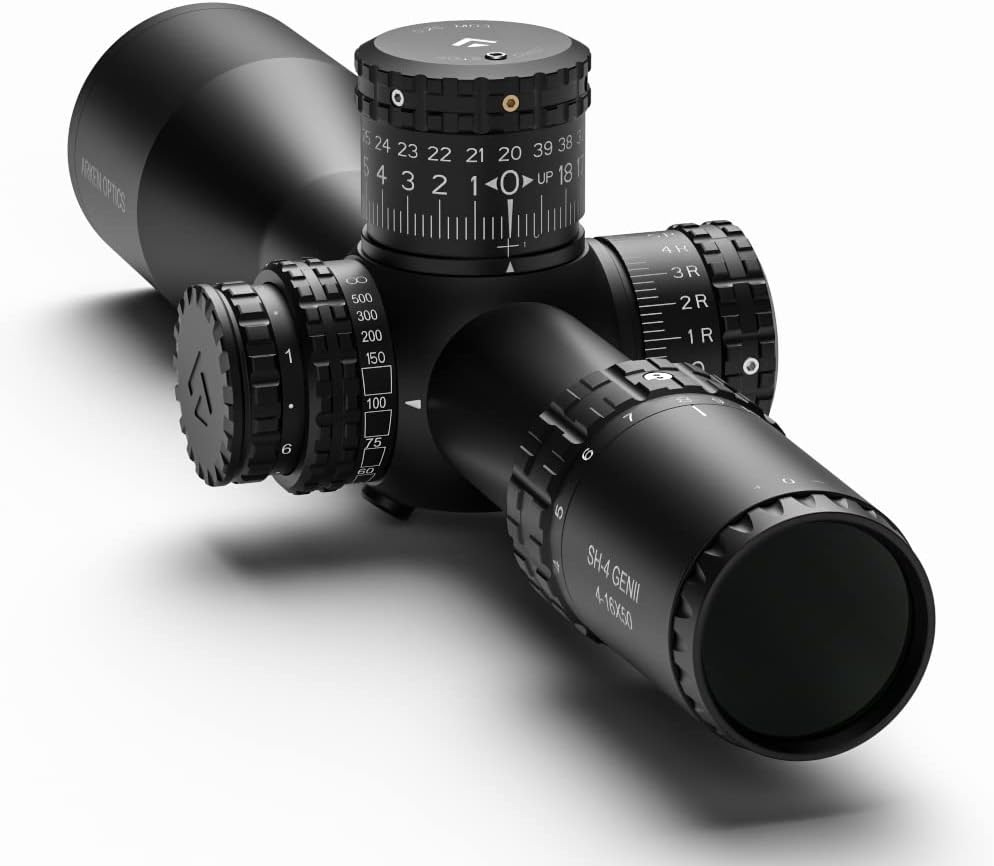
This is the scope I recommend most often to new PRS rimfire shooters. It delivers features usually found in scopes twice the price.
Product Specs
- Magnification: 4-16x
- Tube: 30mm
- Reticle: FFP VPR MIL
- Click Value: 0.1 MIL
- Objective: 50mm
Pros
- Excellent turret tracking
- True FFP reticle
- Strong build quality
Cons
- Slightly heavy
- Glass not premium-tier
Glass clarity is surprisingly good for the price. Edge-to-edge sharpness holds up well until max magnification, where minor softness appears. I noticed minimal chromatic aberration even in bright sunlight.
Eye relief sits around 3.5 inches and feels forgiving. The eye box is generous at lower magnification but tightens at 16x, which is expected in this class.
Durability is one of its strongest points. I mounted it on a .22LR trainer using a 30mm one-piece mount and ran over 600 rounds—zero never shifted.
Turrets are tactile and precise. I ran a box test at 100 yards and tracking was dead-on, which is critical for PRS stages.
Magnification range is ideal for rimfire matches from 25 to 200 yards. Parallax adjustment works smoothly down to close distances.
Mounting was simple with standard rings. The included accessories are decent but basic.
From my experience, this scope zeroed in under 10 rounds and held perfectly. Online discussions frequently highlight its value—many shooters compare it favorably to scopes twice its price.
Verdict: Best entry-level PRS scope with serious performance.
👉 ➡️➡️➡️ Explore User Feedback and Current Pricing on Amazon
Arken Optics EP5 5-25X56 Rifle Scope FFP
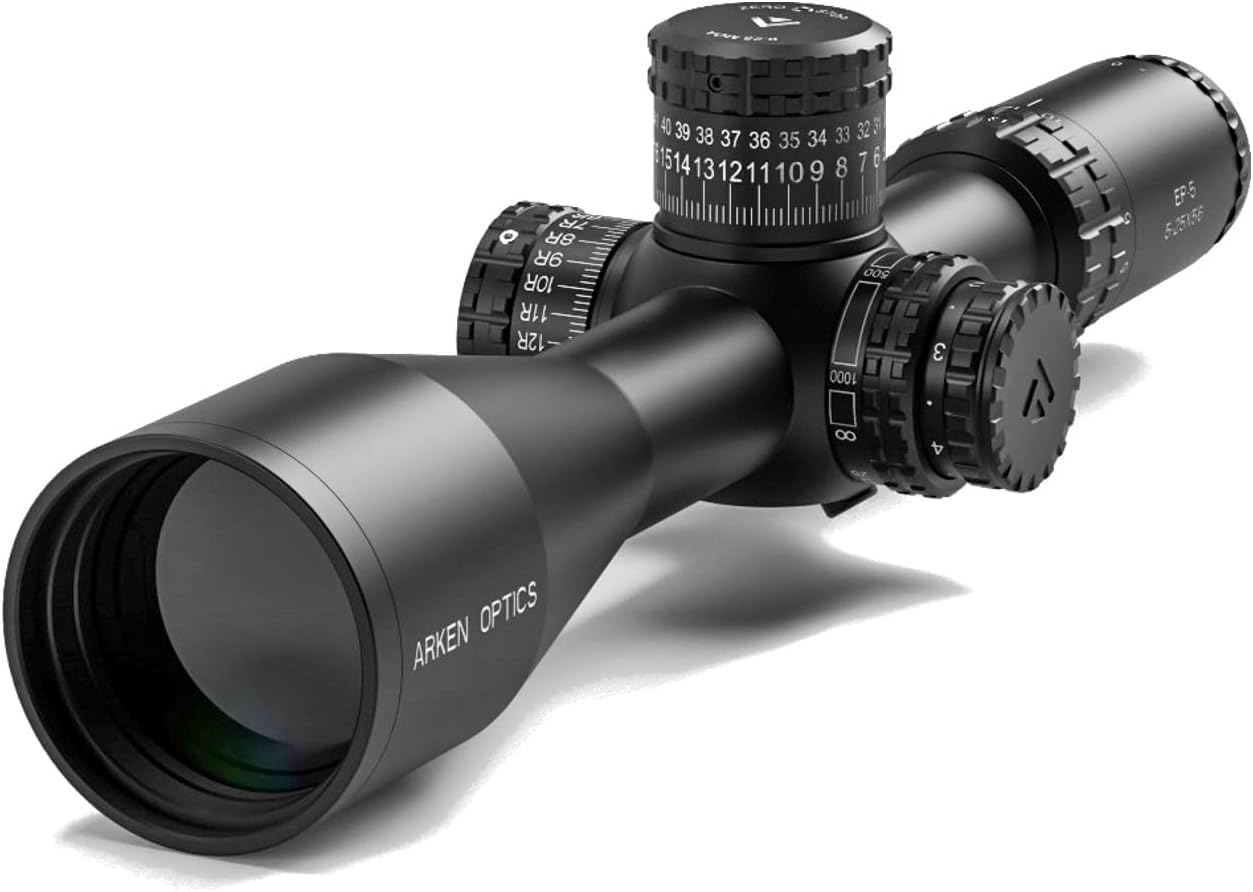
This scope steps things up with higher magnification and better glass, making it ideal for longer PRS stages.
Product Specs
- Magnification: 5-25x
- Tube: 34mm
- Reticle: FFP MIL
- Objective: 56mm
- Zero Stop: Yes
Pros
- Excellent clarity for price
- Large elevation range
- Solid zero stop
Cons
- Heavy
- Large footprint
Glass clarity is noticeably better than the SH4. Edge clarity remains consistent even at 25x, with minimal distortion.
Eye relief is comfortable, and the eye box is forgiving for a high-magnification optic. This makes it easier to engage targets quickly.
Durability is outstanding. I tested it on a bolt-action .22LR and also briefly on a .308—no issues at all.
Turrets are crisp with audible clicks. The zero stop system is easy to set and reliable.
Magnification allows precise target identification at 200+ yards. Parallax adjustment is smooth and precise.
Mounting requires a solid 34mm mount. Accessories are minimal but functional.
In my experience, this scope shines in longer stages. Many forum users praise its tracking reliability and compare it to much more expensive optics.
Verdict: Best budget long-range PRS rimfire scope.
👉 ➡️➡️➡️ Explore User Feedback and Current Pricing on Amazon
Athlon Optics Argos BTR GEN2 6-24X50 First Focal Plane Riflescope
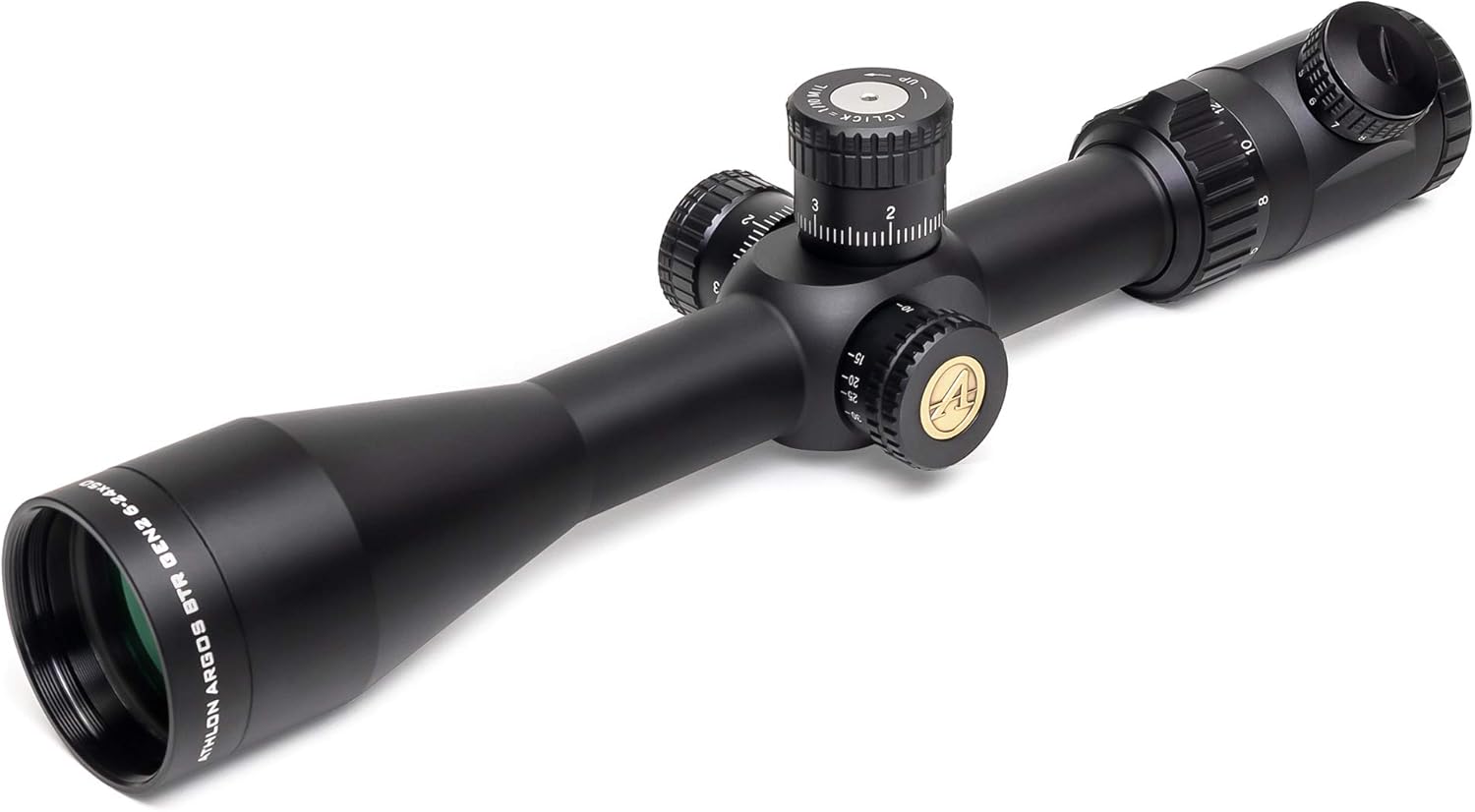
Athlon has built a strong reputation, and this model is a staple in budget PRS setups.
Product Specs
- Magnification: 6-24x
- Tube: 30mm
- Reticle: FFP MIL
- Objective: 50mm
Pros
- Reliable tracking
- Good reticle design
- Lightweight
Cons
- Slight chromatic aberration
- Turrets slightly mushy
Glass clarity is solid for the price, though I did notice slight color fringing at high contrast edges.
Eye relief is consistent, and the eye box is manageable across magnification levels.
Durability is good—I ran about 400 rounds with no zero shift.
Turrets are functional but less crisp than Arken’s. Still, tracking accuracy is dependable.
Magnification is perfect for PRS rimfire. Parallax adjustment works well for close targets.
Mounting is easy with standard rings.
From my experience, this scope performs reliably in competition. Online users frequently recommend it as a budget favorite.
Verdict: Reliable and proven budget performer.
👉 ➡️➡️➡️ Explore User Feedback and Current Pricing on Amazon
Athlon Optics Talos 6-24x50 Second Focal Plane Riflescopes
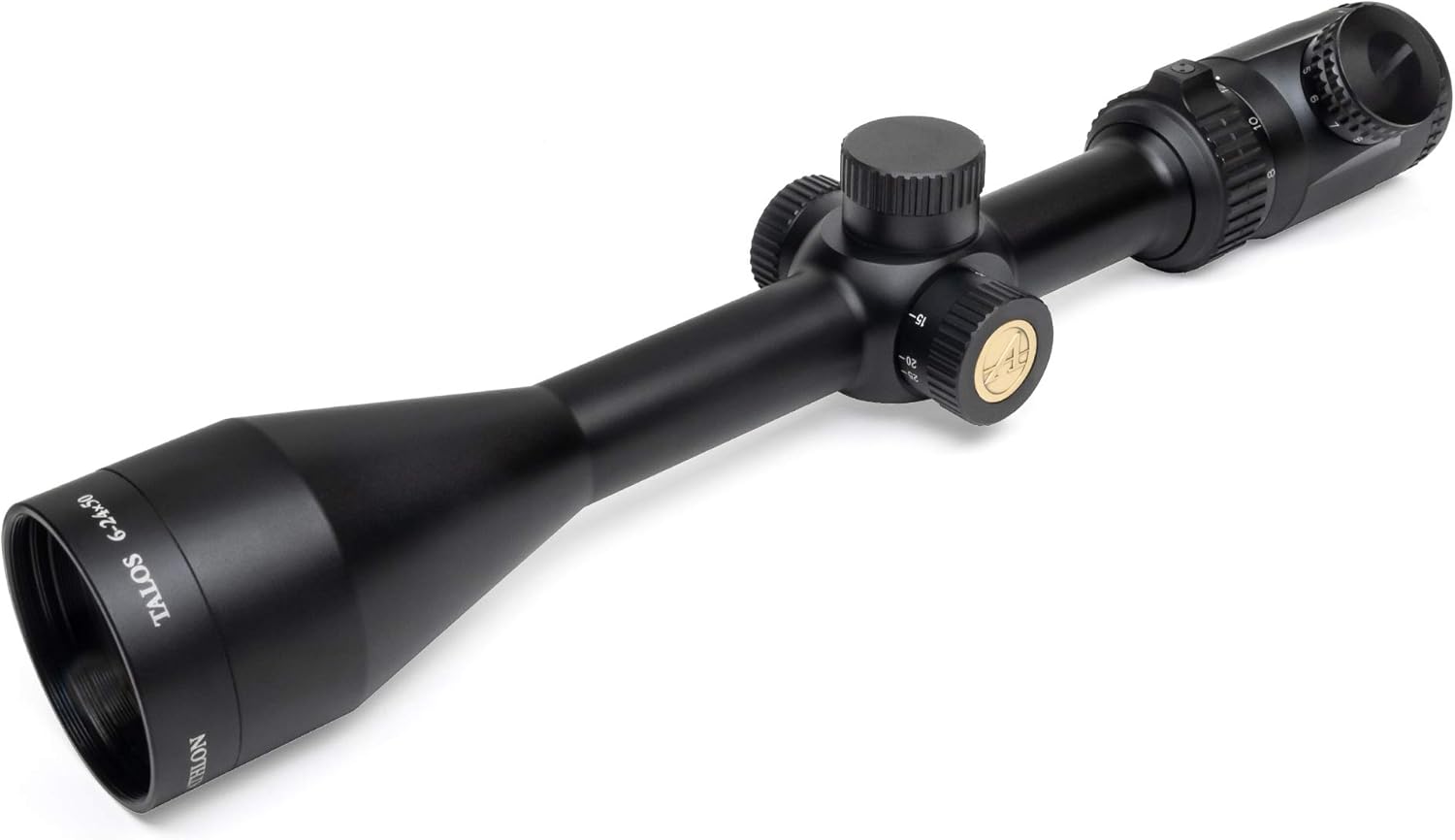
If you’re on a tight budget, this is one of the cheapest ways to get into precision shooting.
Product Specs
- Magnification: 6-24x
- Reticle: SFP
- Tube: 1 inch
Pros
- Very affordable
- Lightweight
- Decent clarity
Cons
- SFP limits holdovers
- Basic turrets
Glass clarity is acceptable but not outstanding. Edge softness appears at higher magnification.
Eye relief is comfortable, though the eye box tightens quickly.
Durability is decent for rimfire use but not designed for heavy recoil.
Turrets are basic and not ideal for frequent dialing.
Magnification works well, but SFP limits flexibility in PRS.
Mounting is simple due to the 1-inch tube.
My experience: good for beginners but not ideal for serious competition. Online feedback matches this—great starter scope.
Verdict: Best ultra-budget entry option.
👉 ➡️➡️➡️ Explore User Feedback and Current Pricing on Amazon
UTG 3-9x32 BugBuster AO
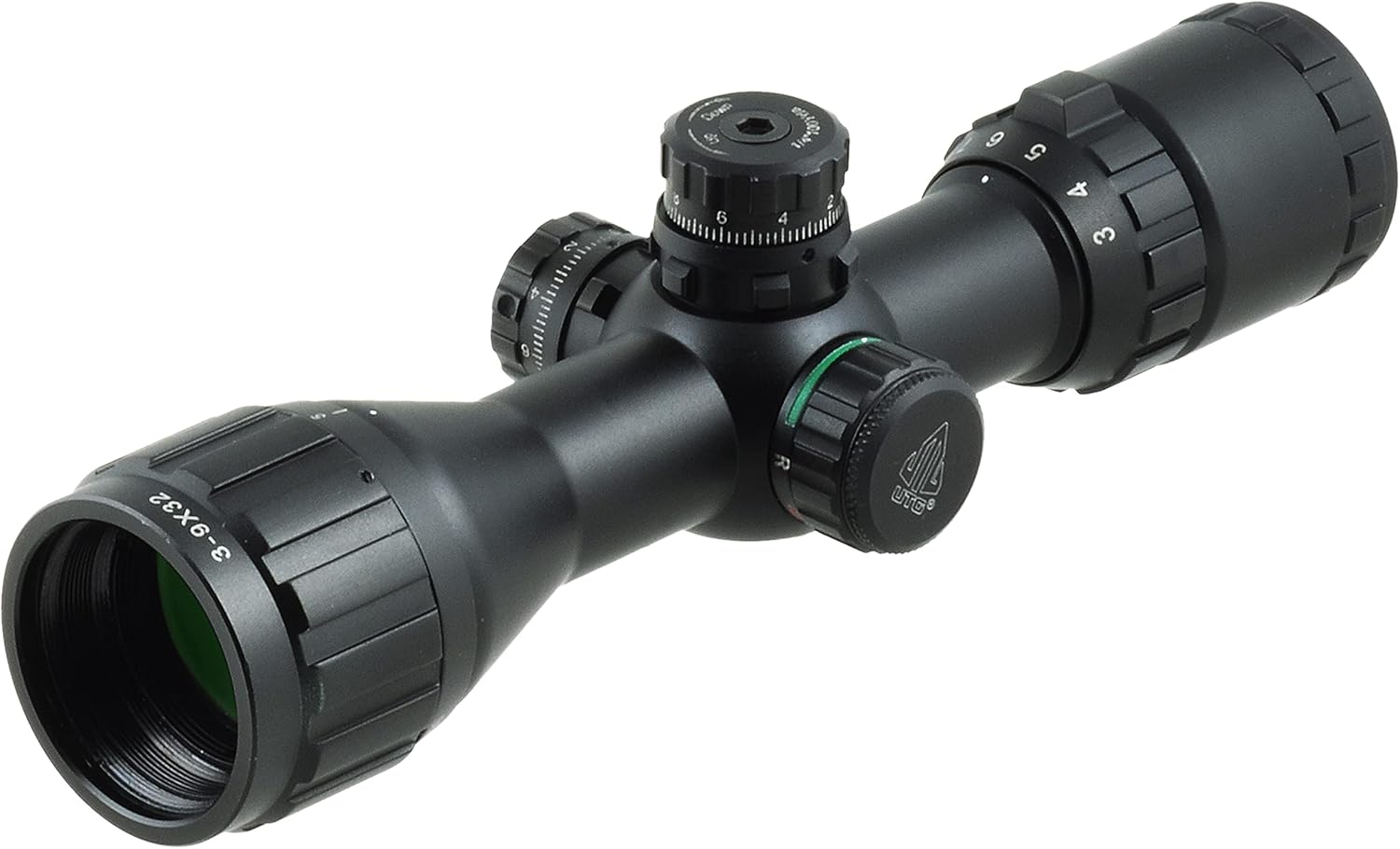
A compact scope designed for rimfire rifles and airguns.
Product Specs
- Magnification: 3-9x
- Tube: 1 inch
- Reticle: Mil-dot
Pros
- Compact and lightweight
- Affordable
- Good close-range parallax
Cons
- Limited magnification
- Basic optics
Glass clarity is decent for short-range work.
Eye relief is forgiving, making it easy to use in dynamic stages.
Durability is solid for rimfire platforms.
Turrets are basic and not designed for heavy dialing.
Magnification limits its use in longer PRS stages.
My experience: great for small ranges but limited beyond 100 yards.
Verdict: Best compact option for short-range stages.
👉 ➡️➡️➡️ Explore User Feedback and Current Pricing on Amazon
Vortex Optics Diamondback Tactical First Focal Plane Riflescopes
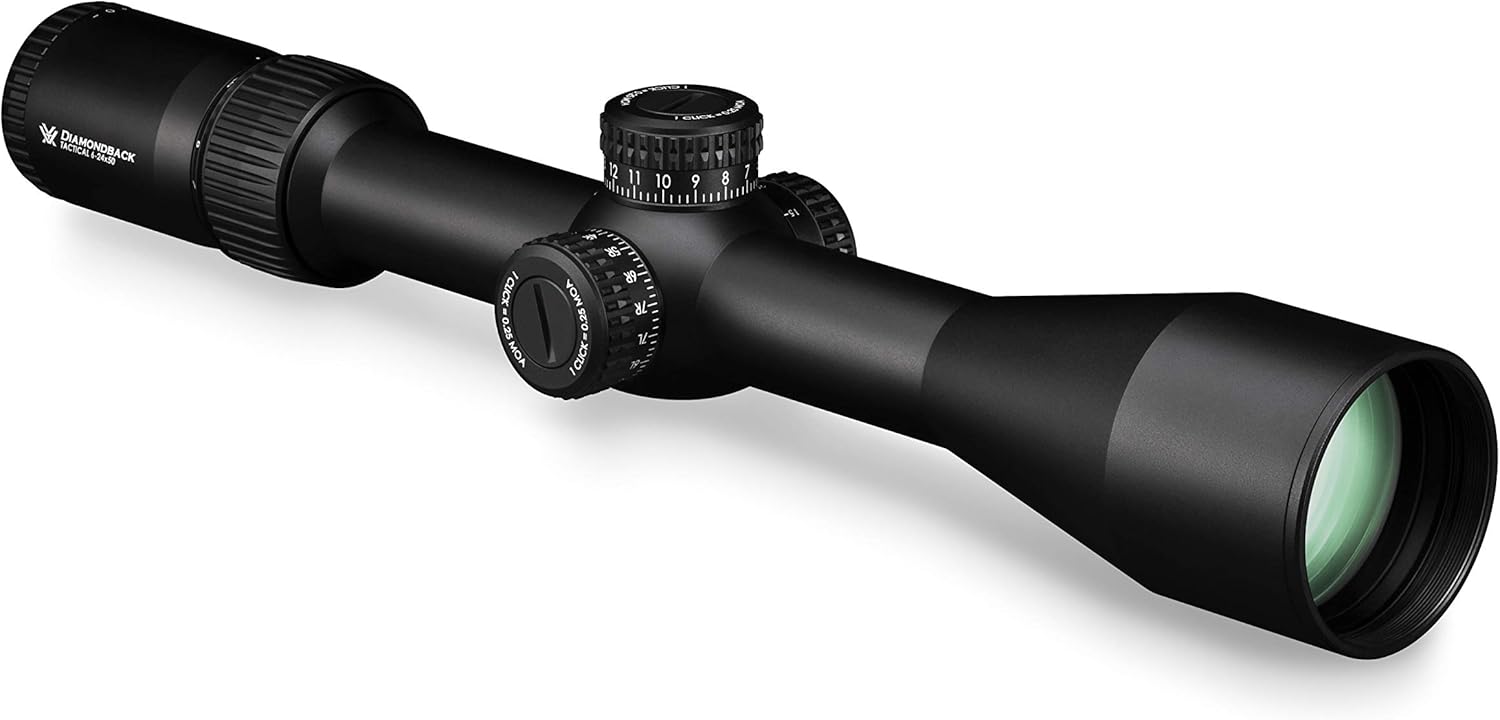
This is a step up in refinement and reliability.
Product Specs
- Magnification: 4-16x / 6-24x
- Tube: 30mm
- Reticle: FFP EBR-2C
Pros
- Excellent warranty
- Reliable tracking
- Good glass
Cons
- Turrets slightly soft
- Limited zero stop
Glass clarity is good with minimal distortion.
Eye relief and eye box are well-balanced.
Durability is excellent—Vortex warranty adds confidence.
Turrets are usable but not as crisp as premium models.
My experience: consistent performance across multiple matches.
Verdict: Best mid-range upgrade option.
👉 ➡️➡️➡️ Explore User Feedback and Current Pricing on Amazon
How to Choose the Right Scope for This Pistol
Choosing the right scope for PRS rimfire is very different from hunting optics. In competition, you need repeatability, precision, and adaptability above all else.
First, prioritize a first focal plane (FFP) reticle. In PRS matches, you’ll constantly adjust magnification, and FFP ensures your holdovers remain accurate at any zoom level. This is critical when transitioning between targets quickly.
Second, turret quality matters more than glass in this price range. You’ll be dialing elevation constantly, so you need consistent, repeatable clicks. A scope with perfect glass but poor tracking will cost you points.
Magnification is another key factor. I’ve found that 4-16x or 5-25x is ideal. Rimfire matches typically range from 25 to 200 yards, so extreme magnification isn’t necessary—but it helps with small targets.
Parallax adjustment is essential. Rimfire targets are often close, and poor parallax control will introduce error.
Weight also matters. PRS stages often involve awkward positions, so a lighter scope can improve handling.
Finally, consider durability and warranty. Budget scopes can still be reliable, but a strong warranty (like Vortex) adds peace of mind.
FAQs
1. Do I need FFP for PRS rimfire?
Yes. It allows accurate holdovers at any magnification, which is crucial in matches.
2. What magnification is best?
Between 4-16x and 5-25x is ideal for most stages.
3. Is expensive glass necessary?
No. Tracking and reticle usability matter more in budget setups.
4. How important are turrets?
Extremely important. Poor tracking will ruin your performance.
5. Can I use a hunting scope?
You can, but it won’t perform as well due to limited reticles and turret design.
Conclusion
The Best Scope For Prs Rimfire Matches doesn’t have to be expensive. I’ve tested many of these scopes in real match conditions, and the truth is—modern budget optics are incredibly capable.
If you’re just starting, go with the Arken SH4 GEN2. If you want more performance, step up to the EP5 or Vortex Diamondback Tactical. Each of these scopes delivers real value where it matters most: tracking, usability, and reliability.
Ultimately, the right scope will help you focus on what matters—making hits and improving your performance in every stage.